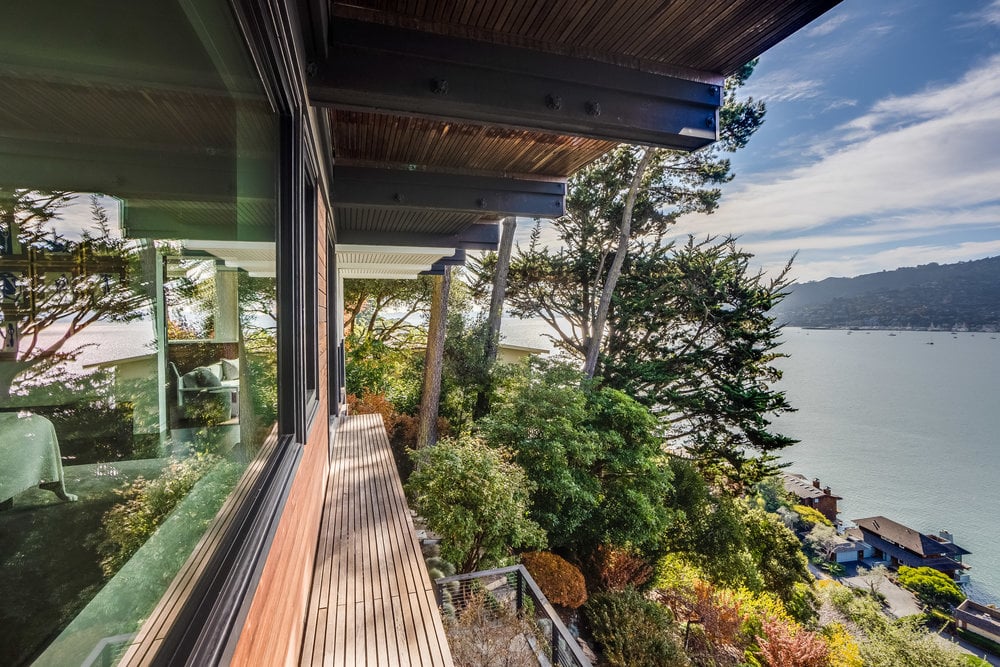
In the winter of 2017, a hillside property in Mill Valley started to move. Rain that season had already saturated the slope for weeks, and a section of an aging soldier-beam wall at the top of the property began to undermine itself while a second wall lower down went out of plumb. Engineers called in on an emergency basis found the yielding lower wall sat directly downhill from a corner of the house. If it failed, the slide would have reached the foundation. The fix was a new steel soldier-pile wall tied back with steel walers, a rebuilt sub-drain system, and benched, recompacted soil across the whole slope. The property has held through several heavy winters since.
That case, documented by the structural repair firm that handled it, is dramatic. Most Mill Valley retaining wall problems never get that far. But the emergency version and the routine version share the same weak point, and it has nothing to do with how the wall looks. It has to do with whether anyone can produce the paperwork proving it was ever engineered in the first place, and whether that paperwork even lives where the seller thinks it does.
The Four-Foot Line
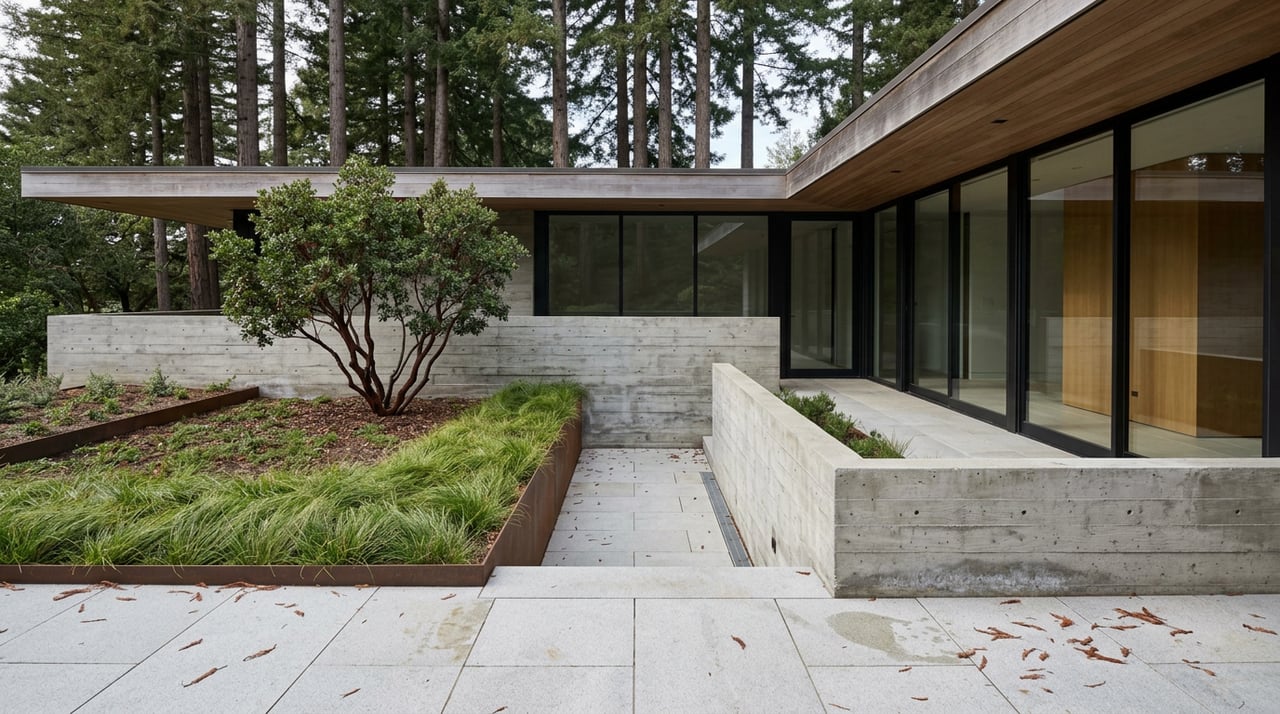
According to Concrete Mill Valley, Mill Valley's slope ordinance draws a line at 30 percent grade, and a separate rule kicks in at 4 feet of wall height. Cross either threshold and a retaining wall stops being a landscaping feature and becomes a structural one: it needs engineered design drawings and a sign-off from a Marin County building official before it's considered compliant. Below that line, a wall can be built with far less oversight. Above it, the expectation is a full engineering record, not just a contractor's word that it's holding.
The trouble is that a huge share of the retaining walls doing real work in Mill Valley sit above that line simply because the terrain demands it, not because anyone set out to build something monumental. A wall holding back a 12-foot cut on a steep lot is an ordinary feature of hillside living here. Whether it has a permit attached to it is a separate question entirely, and it's the question that resurfaces the moment a buyer's inspector or geotechnical consultant walks the property.
Three Mill Valleys, Three Risk Profiles
The city's own housing element documents large portions of its hillsides as steeply sloped, with some exceeding 40 percent grade, and treats that terrain as a genuine constraint on what can be built and how. But "hillside" isn't one condition here. It changes block by block, and the retaining wall question looks different depending on where you are.
| Area | Typical terrain | What usually drives the wall |
|---|---|---|
| Tamalpais Valley, Blithedale Canyon, Warner Canyon | Steep, multi-terrace lots | 10 to 20 foot engineered walls, often integrated with decking and stairs |
| Alto, Sycamore Park, Boyle Park | Mid-slope, expansive clay soils, 6 to 12 foot grades | Pier-and-grade-beam foundations, with walls preventing erosion beneath the beams |
| Strawberry, Almonte, Homestead Valley | Valley floor, moisture-retentive clay | Lower walls still doing drainage work, with some HOAs dictating specific concrete finishes |
A buyer comparing two homes at similar price points in Tamalpais Valley and Homestead Valley is not comparing similar risk. One is more likely to carry a decades-old engineered wall system that needs its own paper trail. The other is more likely to have a shorter, less consequential wall that still needs to move water correctly through clay soil that holds onto moisture. Neither is automatically the safer purchase. They're just different questions.
The Jurisdiction Trap
Here is the detail that catches people off guard. Several Mill Valley addresses, including ones in Strawberry, Tam Valley, Homestead, Almonte, and Alto, are not actually inside city limits. They sit in unincorporated Marin County, which means permit history for those properties doesn't live with the City of Mill Valley at all. It lives with the county.
A seller who searches the city's own permit database for a Strawberry or Homestead Valley address and finds nothing has not learned that the wall was never permitted. They've learned that they searched the wrong building department. The city's online permit system also only goes back to roughly November 2012, so anything older requires a direct request to the planning and building office, and for county-jurisdiction properties, a different call entirely.
This is not a paperwork inconvenience. It's the difference between walking into an inspection period with a clean file or walking in blind and discovering the gap live, in front of a buyer who is now recalculating risk in real time.
What the Inspection Period Actually Tests
California purchase contracts generally give buyers and sellers windows for inspections and required disclosures. Those windows exist for exactly this kind of question. A buyer's inspector notices a substantial wall on a hillside lot, asks whether it was engineered, and the seller now has a matter of days to either produce a permit and possibly an engineering report, or explain why one doesn't exist.
If those documents exist, producing them quickly is a straightforward win. If they don't exist and nobody checked before listing, the conversation happens inside the buyer's contractual clock instead of on the seller's own timeline, and that shift in who controls the pace of the conversation is where negotiating leverage tends to move.
Rain Is the Real Adversary
Marin gets somewhere between 40 and 50 inches of rain most winters, and that volume is the actual reason drainage design matters more here than wall thickness or material choice. A retaining wall usually fails from water pressure building up behind it, not from the soil it's holding simply being too heavy. That's why engineered walls in Mill Valley depend on drainage blankets, French drains, and weeping holes as much as they depend on the concrete or steel doing the retaining.
The 2017 case bears this out. The slide happened during a wet winter, and the repair wasn't just a bigger wall. It was a rebuilt sub-drain system across the entire hillside, because the underlying problem was hydrostatic pressure the original design hadn't accounted for. A wall that looks solid in August can be one saturated winter away from a very different conversation, which is exactly why a buyer's geotechnical consultant will ask about drainage design specifically, not just wall height.
Before You List
If you're preparing to sell a hillside home in Mill Valley or the surrounding unincorporated pockets, a few steps done before a buyer's inspection period starts can change how that conversation goes:
- Confirm whether your property sits within city limits or unincorporated Marin County, since that determines which building department holds your permit history
- Pull whatever permit records exist through the city's online system if applicable, and request older records directly from the planning and building office if you need records for permits dating from before roughly November 2012
- Locate any engineering, geological, or drainage reports you already have on file, even old ones from a prior owner's renovation
- If you genuinely don't know whether a wall over 4 feet was ever engineered, get a professional evaluation before you list rather than during escrow
None of this guarantees a wall passes every test a buyer's engineer might apply. What it does is move the discovery process to a point where you control the timeline, rather than a point where a disclosure clock is already running.
FAQ
Does every retaining wall in Mill Valley need a permit? Not automatically. The threshold is generally a wall over 4 feet in height or a lot steeper than 30 percent grade. Below those marks, requirements are lighter. Above them, the expectation is engineered drawings and inspection by a building official.
What if my address says Mill Valley but I'm not sure about jurisdiction? Several neighborhoods with Mill Valley addresses, including parts of Strawberry, Tam Valley, Homestead, Almonte, and Alto, are unincorporated Marin County rather than city jurisdiction. This affects which office holds your permit records, so it's worth confirming before you assume a search of one database is complete.
Does a retaining wall issue affect financing or insurance, not just the sale price? Slope and structural condition can factor into how a lender or insurer views a property, particularly on steeper hillside lots where fire severity zoning and construction difficulty already narrow the field of available coverage. It's a separate conversation from the wall itself, but one that tends to surface around the same time.
If you're weighing a hillside purchase in Mill Valley, or preparing to list one, the wall behind the house is rarely the whole story. The paperwork behind the wall usually is. The Brody Team has spent four decades learning which Mill Valley streets sit in which jurisdiction and what that means for a transaction timeline. If you want a clear read on your specific property before a buyer's inspector gets there first, contact The Brody Team.
This article is general information, not legal, tax or financial advice. Consult a qualified professional about your situation.