If you are torn between a Mill Valley home with sweeping views and one that puts downtown errands, commuting, and daily routines within easy reach, you are not alone. In a market this competitive, the choice is rarely just about price. It is about how you want your day to feel, what tradeoffs you are comfortable making, and which block best supports the life you actually live. Let’s dive in.
Why this choice matters in Mill Valley
Mill Valley may be compact at about 4.8 square miles, but it does not live like a one-note market. The city has roughly 14,000 residents, a mostly single-family housing stock, and a landscape shaped by hillsides, ridgelines, and narrow road connections. That means one address can offer a very different daily experience from another, even when both share the same Mill Valley name.
The market also leaves little room for casual decision-making. Recent snapshots show Mill Valley remains a tight, high-priced market, with Redfin reporting a trailing-three-month median sale price of $2.4 million in April 2026 and average days on market of 13. Realtor.com’s March 2026 snapshot showed a $1.995 million median listing price, 57 homes for sale, and homes selling at about 102% of asking.
Those headline numbers only tell part of the story. Micro-areas vary meaningfully, and factors like views, parking, lot usability, condition, and access to Highway 101 can shape value as much as the neighborhood label itself. In Mill Valley, your budget may buy a flat block near downtown, a hillside retreat with trail access, or a middle ground that blends both.
In-town convenience means easier daily rhythm
For many buyers, in-town convenience is really about reducing friction. You may want a home that makes school drop-offs, coffee runs, downtown errands, and commute logistics feel simple without needing to plan around hills, stairs, or extra driving. In Mill Valley, that often points buyers toward downtown and the lower-Miller or Throckmorton area.
The city has invested in downtown roadway paving, ADA curb ramps, and pedestrian and bike safety improvements. A Throckmorton Avenue listing near downtown described a sunny flat block just six blocks from shops and cafes, showing what this lifestyle can look like in practice. If you value a shorter daily radius, these blocks tend to stand out.
Convenience can also matter for access beyond town. Mill Valley’s geography funnels many trips toward East Blithedale Avenue and Miller Avenue, the main arterials that connect to Highway 101. If you commute regularly, or simply want quicker access to San Rafael, Sausalito, or San Francisco, proximity to these routes can make a real difference.
View homes offer privacy, outlook, and retreat
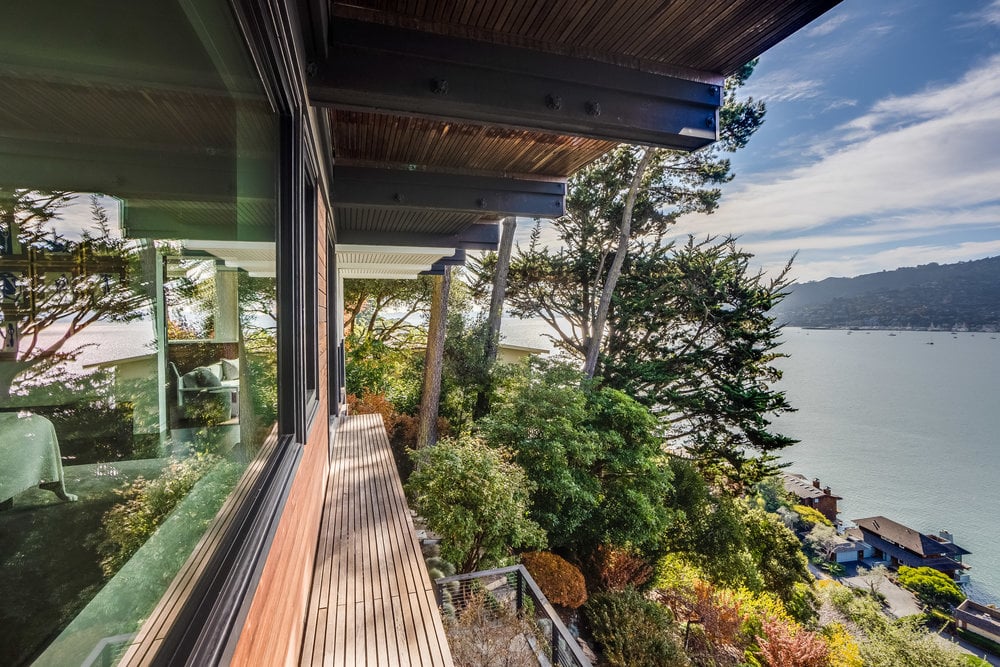
View-oriented homes appeal for a different reason. Instead of centering your life around downtown proximity, they often offer a stronger sense of separation, more dramatic outlooks, and closer access to trails and hillside terrain. For some buyers, that feeling of retreat is the point.
Cascade Canyon, Shelter Ridge, and hillside pockets near Homestead illustrate this appeal. A Cascade Canyon home was marketed with direct access to Mount Tam trails and a short car or bike ride to downtown. A Shelter Ridge townhome emphasized sweeping views, privacy, and quick access to US-101, while a Homestead Boulevard property was described as both near Highway 101 and bikeable to downtown.
These homes are not necessarily remote. In Mill Valley, many hillside properties still offer reasonable access to town and commute routes. But they often shift your daily experience away from flat, walkable convenience and toward elevation, topography, and a stronger connection to open space.
Geography shapes the real tradeoff
The divide between view homes and in-town homes is not just aesthetic. It is structural. Mill Valley sits on the eastern slopes of Mount Tamalpais, and the city says that terrain constrains the roadway network.
That geographic reality helps explain why the tradeoff feels so specific here. A home that looks close on a map may involve steeper streets, narrower access, more turns, or a longer trip to Highway 101 than you expect. In a compact market like Mill Valley, the terrain can matter as much as the mileage.
Transit options can soften that tradeoff for some buyers. Marin Transit Route 17 runs through Mill Valley between San Rafael and Sausalito, with stops including Mill Valley Depot, Miller Avenue, and East Blithedale Avenue. Golden Gate Transit lists Route 114 as the Mill Valley to San Francisco commute bus, and ferries operate to San Francisco from Sausalito, Tiburon, and Larkspur.
If you work from home part of the week, bike regularly, or use transit strategically, your ideal location may widen. Mill Valley’s walk-and-bike resources reflect a community that pays attention to mobility alternatives, and the city notes that transportation produces more than 55% of community emissions. That local focus helps explain why buyers often weigh bike access, bus routes, and route efficiency almost as carefully as square footage.
Parking can change your quality of life
Parking is one of the most practical differences between these two lifestyles. A beautiful view may lose some shine if street parking is tight, guest access is difficult, or your daily routine involves frequent car shuffling. On the other hand, a more central home can simplify errands and reduce total drive time, even if downtown parking itself takes some planning.
Mill Valley’s parking program shows how seriously the city treats this issue. Eligible residents can use the RSVP program to park in metered downtown spaces without paying the meter, usually for up to two hours between 9 a.m. and 6 p.m. The city also allows permitted cars in designated residential parking zones to stay up to 72 hours.
Still, not every home handles parking equally. Some in-town properties may offer garages and generous lots, while others trade private parking ease for walkability. Some hillside homes offer covered parking or attached garages, but access patterns can be more site-specific because of slope and road layout.
Yard space and outdoor living look different here
Buyers often assume a larger-feeling home automatically comes with easier outdoor space. In Mill Valley, that is not always true. Yard usability can vary dramatically based on slope, grading, sun exposure, and how the property is positioned on the lot.
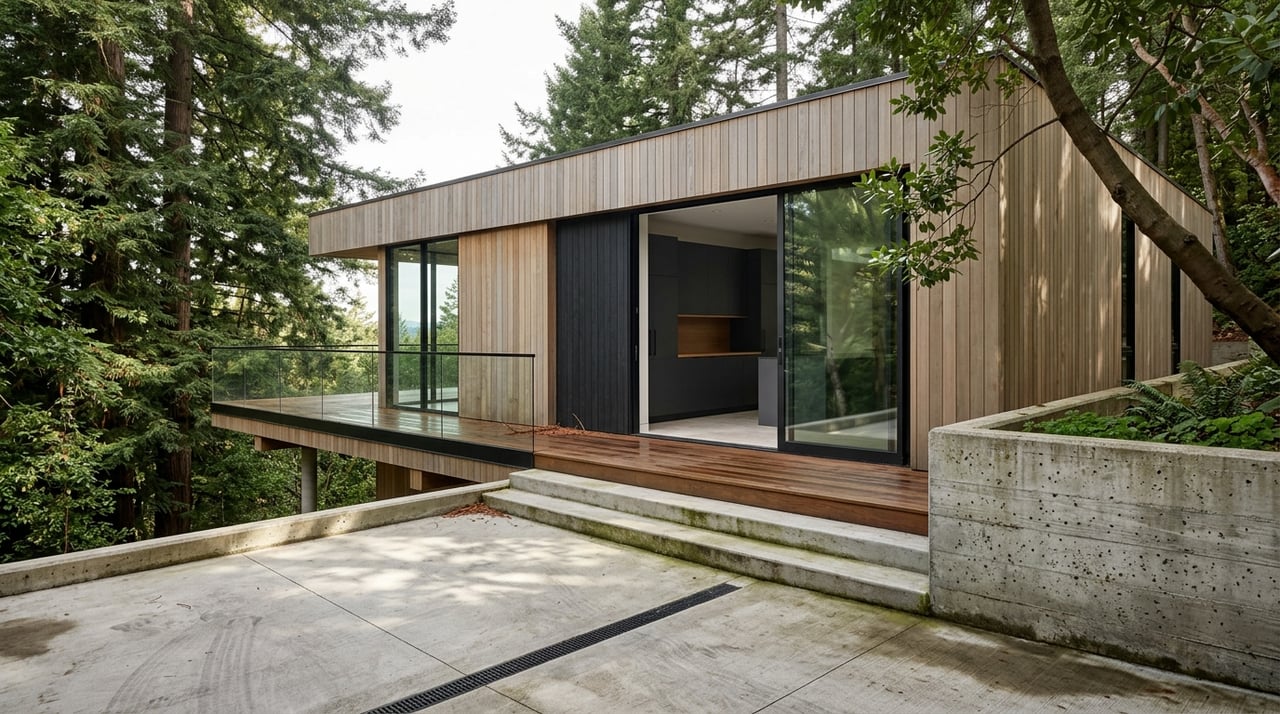
A downtown-adjacent Throckmorton Avenue property was described as offering a 0.42-acre lot, two patios, a large roof deck, a two-car garage, and a separate studio apartment. That kind of flat, usable outdoor setup can be especially attractive if you want entertaining space or easier day-to-day use. It also shows that in-town living does not always mean giving up lot quality.
By contrast, a Shelter Ridge townhome emphasized a view balcony, private patio, two-car covered carport, and shared resort-style amenities. A Cascade Canyon home highlighted decks, a front garden, direct trail access, and a two-car attached garage. In other words, the outdoor tradeoff is often less about size alone and more about how you want to use the space.
Topography affects more than scenery
Hillside living comes with benefits, but it also asks more from you in practical ways. Stairs, sloped driveways, route planning, and lot maintenance can all become part of your daily routine. That does not make one choice better than the other, but it does make fit especially important.
Mill Valley’s evacuation guidance tells residents to know at least two ways out of their home, workplace, and neighborhood. The city also has a Steps, Lanes, & Paths system with more than 175 original routes that help connect parts of town. For buyers considering hillside areas, access and route options deserve the same attention as views and interior finishes.
This is one reason local guidance matters so much in Mill Valley. Two homes at similar price points can feel entirely different in terms of driveway ease, pedestrian routes, slope exposure, and how quickly you can get where you need to go.
City limits can affect expectations
Another detail worth checking early is whether a property is actually within the City of Mill Valley. The city notes that some Mill Valley postal addresses in Strawberry, Tam Valley, Homestead, Almonte, and Alto are outside city limits in unincorporated Marin. For a buyer, that can affect expectations about governance and city services.
This is especially relevant if you are relocating and relying on a mailing address or search portal map. A home can feel very much like Mill Valley while falling outside the city’s jurisdiction. That does not automatically change whether it is the right fit, but it is something to verify before you get too far into your search.
Which lifestyle tends to fit which buyer?
If your goal is to simplify the flow of everyday life, in-town convenience may be the stronger fit. You may value easier errands, flatter surroundings, quicker access to downtown, and a shorter mental checklist for parking, stairs, and route planning. For many buyers, that ease is worth more than an elevated outlook.
If your priority is privacy, trail access, and a stronger sense of retreat, a view home may feel more rewarding. You may be happy to trade some convenience for outdoor immersion, more dramatic scenery, or a home that feels tucked away from the center of town. In Mill Valley, those homes can still offer good access, but they usually ask you to embrace the terrain rather than minimize it.
Some buyers land in the middle. Mill Valley has homes that balance both, especially in micro-areas that offer decent access to Highway 101, bikeable routes to downtown, and some form of outlook or open-space connection. In this market, the smartest choice is rarely the one that sounds best in theory. It is the one that best reduces the friction you care about most.
How to compare homes more clearly
When you tour homes in Mill Valley, try comparing them through a daily-life lens instead of a feature-only lens. This often makes the right choice clearer, especially when two properties seem equally appealing for different reasons.
Ask yourself:
- How often will you need quick Highway 101 access?
- Do you want to walk or bike to downtown regularly?
- How much slope, stairs, or driveway complexity feels comfortable?
- Would you rather have a flatter yard or a stronger view line?
- How important are trail access and privacy?
- What kind of parking setup will feel easy for your household?
- Do you want city-limit convenience, or are you open to nearby unincorporated areas with a Mill Valley address?
In a market as nuanced as Mill Valley, the winning home is often the one that supports your habits, not just your wish list. That is where hyperlocal context becomes valuable.
If you want help weighing a view property against an in-town option, Beth Brody can help you compare the real day-to-day tradeoffs, identify the right micro-area, and uncover opportunities that fit how you actually want to live.
FAQs
What is the main difference between Mill Valley view homes and in-town homes?
- View homes often offer more privacy, outlook, and trail access, while in-town homes usually make errands, commuting, and daily routines easier.
Which Mill Valley areas are often associated with in-town convenience?
- Downtown and the lower-Miller or Throckmorton area are commonly associated with a shorter daily radius and easier access to shops, cafes, and key routes.
Which Mill Valley areas are often associated with views and retreat?
- Hillside and canyon pockets such as Cascade Canyon, Shelter Ridge, and parts of Homestead are often tied to outlooks, privacy, and closer access to open space.
How does Mill Valley geography affect commuting?
- Mill Valley’s terrain constrains the roadway network, and many trips rely on East Blithedale Avenue and Miller Avenue for access to Highway 101.
Are transit options available for Mill Valley commuters?
- Yes. Marin Transit Route 17 serves Mill Valley, Golden Gate Transit lists Route 114 to San Francisco, and ferry service to San Francisco is available from Sausalito, Tiburon, and Larkspur.
Why is parking such a big factor when buying in Mill Valley?
- Parking can affect daily ease, guest access, and how convenient a location feels, especially when comparing denser in-town blocks with more site-specific hillside properties.
Do all Mill Valley addresses fall within the City of Mill Valley?
- No. Some properties with Mill Valley postal addresses are in unincorporated Marin, so buyers should verify jurisdiction early in the process.