If you follow Marin real estate, you know the word “luxury” gets used a lot. But what counts as luxury in Belvedere is very different from San Rafael, and the rules of the game shift once prices cross into the seven and eight figures. You want clarity on what truly drives value, where off‑market inventory lives, and how pricing and negotiation really work at the top. This guide breaks it all down so you can move with confidence in Marin’s upper tier. Let’s dive in.
What counts as “luxury” in Marin
Many pros define luxury by the top slice of a local market rather than a fixed dollar amount. A common benchmark is the top 10 percent of recent sales, sometimes called the 90th percentile. That keeps the definition tied to real, local demand instead of national headlines. You will also hear “high‑end luxury” for the top 5 percent and “ultra‑luxury” for the top 1 percent. You can learn more about these tiers from industry groups that track luxury thresholds, including the Certified Luxury Home Marketing Specialist program at the Institute for Luxury Home Marketing (how practitioners define luxury).
In practice, Marin’s entry point to luxury often starts in the low‑ to mid‑millions, with a clearer upper‑tier at $3 million and above. The exact number depends on the town. As a recent snapshot, county data showed a Marin median around the mid‑$1 millions in late 2025. Community medians varied widely: Belvedere was in the $7 million range, Tiburon near $3 million, Kentfield about $2.5 million, Mill Valley around $2.25 million, and San Rafael near $1.25 million. The takeaway is simple: set your luxury strategy town by town, not countywide.
Inventory and timing in Marin’s upper tier
High‑level numbers only tell part of the story. In late 2025, Marin showed a tight supply environment with average market times around six weeks and inventory well below the prior year. That said, micro‑markets behave differently. Some pockets have only a handful of active listings at any time, while others see steady turnover.
Micro‑markets at a glance
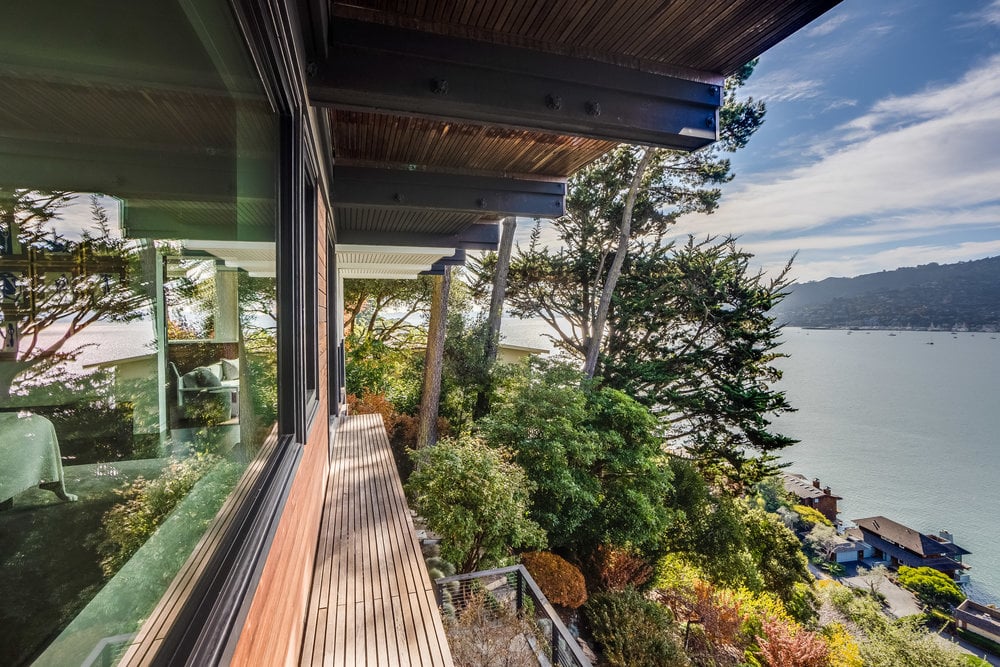
- Belvedere and Tiburon waterfront estates have limited supply and a higher incidence of private or discreet marketing. Days on market can stretch when sellers test ultra‑high price points or unique properties.
- Mill Valley, Kentfield, and Sausalito show steadier luxury activity with more frequent turnover than Belvedere. Per‑square‑foot pricing depends heavily on lot characteristics, views, and access to everyday amenities and transit.
Who buys and how they finance
Marin’s high‑end buyers include Bay Area executives and founders, San Francisco move‑ups seeking space, long‑time locals trading up or down, second‑home buyers, and family trusts. Many purchases close with cash or large down payments. For financing, expect jumbo loans to be common because most luxury prices sit above federal conforming limits. The FHFA’s 2026 baseline conforming limit is $832,750 and the high‑cost ceiling is $1,249,125. At Marin price points, those caps mean jumbo underwriting and appraisal scrutiny are normal (FHFA 2026 loan limits).
Off‑market and private listings explained
You will hear the terms off‑market, private exclusive, office exclusive, and coming soon. They all describe versions of limited exposure before a listing is fully public on the MLS and portals. Sellers choose these paths for privacy, security, sensitive life events, or to test pricing with a smaller pool of qualified buyers. The approach is common in Marin’s upper tier, where high‑profile or high‑value properties call for discretion.
Rules you should know
The National Association of REALTORS adopted the Clear Cooperation policy, which requires that once a home is publicly marketed it must be submitted to the local MLS within a short window, typically one business day. Sellers also have defined options like office exclusives and delayed public marketing if they instruct their brokerage and sign the proper disclosures. The details matter, and they are implemented by each local MLS, so your agent should walk you through the forms and trade‑offs (NAR Clear Cooperation overview, NAR Multiple Listing Options for Sellers).
Portals and the current debate
Major portals have tightened how they handle listings that start off‑MLS and then go public. In 2025, new portal standards triggered industry debate and litigation over how long private marketing can last before a listing must hit the MLS to appear on those sites. Coverage of the enforcement push and legal fight explains why sellers and agents need a clear plan if using a private phase (industry litigation coverage, portal policy reporting).
What this means for you
Private phases can protect confidentiality and target a known buyer pool. The trade‑off is reduced exposure, which can mean fewer competing offers. Independent reporting and industry commentary note that evidence is mixed on whether extended private marketing yields higher prices, and many observers argue that broad exposure usually maximizes competition and value. Make the call based on your goals, your timeline, and the property’s uniqueness (industry commentary on private listings).
Pricing, valuation, and negotiation at the top
Pricing strategy and comps
Luxury comps are thinner. You often need a wider geographic search and a longer look‑back, sometimes 12 to 24 months. Adjustments for design, view, waterfront, acreage, and privacy weigh more than automated models. A strong strategy blends data and buyer‑pool analysis so your price tells a persuasive story on day one.
Appraisals and financing realities
Sparse comps can lead to appraisal gaps, even when both sides agree on value. Buyers should plan for the possibility of a shortfall and decide in advance how to handle it. Sellers can reduce surprises with pre‑listing opinions of value or an appraisal from a luxury‑experienced professional. On the lending side, jumbo underwriting takes longer and asks for more documentation. Plan your timeline accordingly and align your contingency clocks with your lender’s process (FHFA 2026 loan limits).
Contract terms that matter
In seven‑ and eight‑figure deals, non‑price terms can be as important as headline price. You may negotiate confidentiality provisions, flexible timing, rent‑backs, tailored inspection windows, or proof‑of‑funds standards. Trusted advisors like wealth managers and counsel are commonly involved. If a property moved through a private phase, expect more direct agent‑to‑agent qualification and negotiation before a broader release.
Seller checklist for premium results
- Define your objective. Is privacy essential or is price competition the priority? If you want a private or phased approach, document that instruction and review your MLS options with your agent (NAR options for sellers).
- Prepare your pricing foundation. Secure a high‑end appraisal or multiple broker opinions and review recent luxury comps so you can anticipate lender responses and buyer questions.
- Set your marketing plan. If you use a limited‑exposure phase, outline the audience, timeline, and triggers for going fully public. Confirm how portal standards could affect visibility and why timing matters.
- Stage and sequence. Premium presentation, scheduling, and storytelling build pricing power. In Marin, a polished debut paired with the right distribution creates urgency among qualified buyers.
- Know your taxes and fees. California has a state documentary transfer tax baseline of $1.10 per $1,000 of price, and some cities or counties add their own layers. Verify the specifics with escrow and local counsel (overview of transfer taxes).
Buyer checklist for discrete access
- Get fully prepared. Have current proof of funds or a lender preapproval that reflects jumbo realities. Remember the 2026 conforming baseline of $832,750 and high‑cost ceiling of $1,249,125 when planning (FHFA 2026 loan limits).
- Budget for appraisal variance. Unique properties can appraise below contract price. Decide in advance if you will bridge a gap, adjust terms, or walk away.
- Lean on local expertise. Marin’s micro‑markets are nuanced by street, view corridor, and hillside. Work with a luxury specialist who understands off‑market channels and stays compliant with MLS and portal rules.
- Tailor your terms. Shortened timelines, clean contingencies, and rent‑back flexibility can win you the home even if you are not the top price.
Key takeaways
- Luxury in Marin is a local threshold, not a fixed national number. In many towns, $3 million marks a clear upper‑tier starting point.
- Inventory is tight and hyper‑local. Waterfront and trophy properties move differently than hillside moderns or in‑town homes.
- Private phases can be smart for privacy, but broad exposure usually maximizes competition. Know the rules and portal timelines.
- Pricing and appraisals rely on careful qualitative analysis. Jumbo financing and longer underwriting are common.
If you want a confidential conversation about timing, pricing, or off‑market access in Marin, reach out to Beth Brody. You will get multigenerational local knowledge, boutique service, and the strategic use of modern tools to meet your goals.
FAQs
Where does luxury start in Marin County?
- Many pros use the top 10 percent of recent sales as a benchmark. In Marin, that typically translates to the low‑ to mid‑millions as an entry point and about $3 million for a clear upper‑tier, with town‑by‑town variation (how pros define luxury).
Are off‑market listings legal in Marin’s luxury segment?
- Yes, if the seller instructs the broker and local MLS rules are followed. NAR’s Clear Cooperation policy sets timelines for when public marketing requires MLS submission, and sellers have defined listing options when handled correctly (NAR policy overview).
How do portal rules affect private marketing?
- Major portals have tightened standards for listings that start off‑MLS, which affects how long a property can be marketed privately before going public if you want portal exposure. Recent enforcement and litigation make timing an important strategic choice (industry coverage).
Do Private Exclusives lead to higher prices in Marin?
- Evidence is mixed. Private phases can protect privacy or test a price with a qualified pool, while broad exposure usually increases competition. Choose the path that fits your property and goals (industry commentary).
What financing is most common for high‑end Marin homes?
- Cash and jumbo loans are common. The FHFA’s 2026 conforming baseline is $832,750 and the high‑cost ceiling is $1,249,125, so many luxury purchases exceed those caps and require jumbo underwriting (FHFA limits).